Durga was employed as a gardener at the residence of Dr. Mehra, a prominent Barrister-at-Law, earning a meager wage of five rupees a month.
His household consisted of his wife and two or three young children. His wife ground wheat for neighbors to earn a few coppers, while their two older children gathered dry firewood and fallen grain from surrounding fields. Yet despite all their frantic efforts, the family lived in bitter poverty and hardship.
To survive, Durga would secretly pluck flowers from Dr. Mehra's garden when the master wasn't looking, selling them to temple priests in the bazaar. Occasionally, he helped himself to garden fruit as well. This modest side income provided for essential daily salt and oil.
Durga had repeatedly begged Dr. Mehra for a small pay raise; but the Doctor regarded a servant's wage hike as a contagious disease that spreads from one employee to infect the rest. He would bluntly dismiss the plea: "Brother, I haven't tied you to my doorstep! If five rupees isn't enough for your living, go elsewhere. I am not suffering from a shortage of gardeners!"
Durga lacked the courage to abandon a guaranteed job to search for another—nor did he hold any hope of finding higher pay elsewhere. So he remained trapped in despair, weeping over his bitter fate.
Dr. Mehra possessed a passion for horticulture. He had planted rare flora in his vast garden, ordering prized fruit saplings from Darbhanga, Malihabad, and Saharanpur.
Seeing the branches laden with fruit gave him immense joy. He frequently sent floral bouquets and baskets of fresh garden produce as gifts to his elite friends. He cared little for eating the fruit himself; his true delight lay in feeding his high-society companions. Organizing fruit-tasting banquets and picnic parties in his garden was his chief form of entertainment.
One summer evening, Dr. Mehra invited several distinguished friends to an exclusive mango-tasting party. His prized Malihabadi Safeda mango trees were laden with luscious fruit. The Doctor checked on those trees daily, eager to hear his guests praise their exquisite sweetness—resembling a champion wrestler boasting of his pupil's feats!
He considered those Safeda mangoes the largest, most delicate specimens he had ever cultivated. He felt so confident in their flavor that he didn't bother tasting one beforehand—primarily because reducing the count by even a single mango would deprive one of his guests!
It was a cool spring evening. The guests arrived and took their seats on armchairs beside the garden fountain. Ice and milk had been prepared, but the fruit had not yet been plucked. Dr. Mehra wanted his guests to admire the mangoes hanging from the branches first, proving they were fresh products of his own garden.
When the assembly gathered, Dr. Mehra announced with pride: "Gentlemen, pardon the slight walk, but come see the fruit hanging on the trees! It is a breathtaking sight. Even a rose does not possess such eye-catching blush. The color itself drips with sweetness! I ordered this graft specifically from Malihabad and cultivated it with extraordinary care."
The guests rose and followed Dr. Mehra along paths lined with rose beds, arriving finally before the Safeda mango tree.
Behold! Not a single fruit remained on the tree!
Shocked, Dr. Mehra thought he had approached the wrong tree. He took two steps forward to a second tree—empty! A third tree—empty!
He retreated, standing under the Safeda tree in utter bewilderment. There was no doubt this was the tree—so where had the fruit gone? Twenty or twenty-five large mangoes had vanished without a trace!
Turning to his guests with embarrassed, furious eyes, he stammered: "It is astonishing! This morning the tree was weighed down with fruit! Look—here are the freshly snapped stems! This is undeniably the gardener's mischief. I shall break the rascal's bones today! That scoundrel has humiliated me so terribly! I am deeply embarrassed that you gentlemen were inconvenienced. Words cannot express the grief I feel—I have never seen such tender, gorgeous fruit in my life. Their sudden disappearance breaks my heart!"
Saying this, he sank into a chair in bitter frustration.
The guests offered consoling remarks: "Servants are the same everywhere, Doctor! They are a treacherous breed. Please do not grieve on our account—if not Safeda, we shall enjoy other fruits!"
One guest remarked casually: "To be honest, all mangoes taste the same to me—Safeda, Langda, Bombay, Fazli, Dashahari—I can't tell the difference!"
Dr. Mehra said sorrowfully: "There is no shortage of other mangoes—the entire orchard is full! Eat as much as you like and carry baskets home! But where will you find that exquisite flavor? You won't believe it, but those Safedas looked like rosy apples! A traitorous gardener has ruined everything today—I feel like shooting the ungrateful rascal on the spot!"
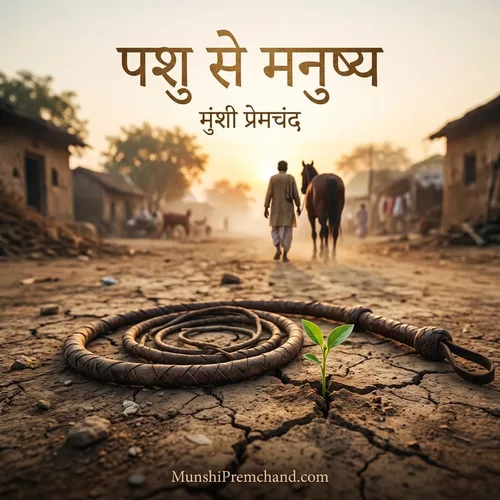
The gardener Durga was away at the market. Dr. Mehra had his groom pick other mangoes, the guests enjoyed their milk and fruit, thanked the host, and departed. But Mr. Mehra remained seated by the fountain, a horsewhip (hunter) resting in his hand, waiting for Durga like an embodiment of furious wrath!
Late into the night, Durga returned from the market, scanning the premises with cautious, apprehensive eyes.
The moment his eyes fell upon Dr. Mehra sitting by the fountain with a leather whip in his hand, his heart sank into his boots! He realized his theft had been exposed.
It was out of this very fear that he had deliberately delayed his return in the market, hoping the master would have gone out for his evening drive. His plan had been to slip quietly into his mud hut under the jackfruit tree, so that if questioned the next morning, he could offer an innocent defense: "Search my hut, master!"
Time is a thief's greatest ally—every passing moment helps build a defense. But when caught red-handed, no escape remains. Dry bloodstains might resemble paint, but fresh blood cries out on its own!
Durga's feet froze; his chest throbbed. Dr. Mehra's sharp eyes had already spotted him. Turning back was impossible.
Dr. Mehra rose from his chair, intending to thrash him on the spot; but being a seasoned legal barrister, he decided to record a formal confession first. He gestured sharply for Durga to approach:
"Several large mangoes were hanging on the Safeda tree this morning. Not a single one remains. Where did they go?"
Durga offered a look of wide-eyed innocence: "Huzoor, I went to the market just a while ago and all the mangoes were on the tree! If someone stole them while I was away, I cannot say."
"Whom do you suspect?"
"Huzoor, how can I accuse anyone? There are so many servants around—who knows whose intentions turned dishonest?"
Dr. Mehra glared at him: "My suspicion is squarely on you! If you have plucked and hidden them, produce them right now or admit your guilt, or I will deal with you severely!"
A thief fears public humiliation far more than physical punishment. When all hope of escape vanishes, he still refuses to admit his crime, preferring to suffer punishment as an accused innocent rather than live as a confessed criminal.
Durga could have saved himself from a beating by confessing; instead he insisted: "Huzoor is the master—do as you wish! But I did not pluck those mangoes. I have served your household for years—have I ever touched even a single leaf without permission?"
Dr. Mehra challenged: "Can you swear a solemn oath?"
"I swear on the holy water of the Ganges that I did not touch those mangoes with my hands!"
Dr. Mehra sneered: "I don't trust your spoken oath! Fetch a brass pot filled with water, drop sacred basil leaves (tulsi) into it, and swear: 'If I stole those mangoes, may my son perish!' Only then will I believe you."
Durga stammered: "Huzoor, truth fears no test! I will swear whatever oath you command. When I haven't committed the crime, why should an oath harm me?"
"Stop talking and go fetch the water!"
Dr. Mehra was a keen judge of human behavior. Though Durga spoke with defiant confidence, terror reigned within his heart. He walked back to his mud hut, but his hands trembled violently as he reached for the brass pot.
Terrifying memories flashed through his mind—stories of dishonest men who raised false Ganga water and were struck down by divine wrath! Never before had he felt such a bone-chilling belief in an all-seeing God.
He resolved: I will not swear a false oath on sacred Ganga water! What is the worst that can happen? He will fire me from his service. I will find employment somewhere else; and if no job turns up, manual labor is always available. Even if I wield a pickaxe all day, I will earn enough for half a seer of flour by sunset!
He walked back slowly and stood before Dr. Mehra with empty hands.
Dr. Mehra asked sternly: "Did you bring the water?"
Durga bowed his head: "Huzoor... I will not swear on Ganga water."
"Then your guilt is proven!"
Durga pleaded softly: "Huzoor may believe whatever he wishes. Even if I plucked those mangoes, am I not your slave? I serve you day and night. If my little children cried for a taste of mangoes, where else could I go? Spare my life this once—I shall never commit such a mistake again."
Dr. Mehra was not a merciful man. He considered it a great act of generosity that he did not hand Durga over to the police, choosing instead to thrash him repeatedly with his leather whip. Durga's religious fear had softened him slightly; but keeping such a weak-charactered servant was impossible.
He fired Durga on the spot and confiscated half a month of his earned wages!
Several months later, Dr. Mehra visited the extensive agricultural gardens of Babu Premshankar, seeking to purchase high-quality fruit grafts.
Premshankar shared Dr. Mehra's passion for horticulture; but in all other matters of life, the two men stood as polar opposites. Premshankar was a gentle, humble, deeply empathetic idealist who had spent several years in America studying scientific agriculture. Upon returning to India, he had made farming his life's mission.
His views on human nature and social organization were considered eccentric by high society. Wealthy urbanites treated him with cool indifference, regarding him as a visionary crackpot. While people expressed philosophical sympathy with his egalitarian ideals, they doubted their practical feasibility in the real world.
When Dr. Mehra arrived at the estate, he found Premshankar watering flowerbeds himself. Near the well, a man was operating a mechanical water pump.
Dr. Mehra recognized the man instantly—it was Durga the gardener!
A strange surge of petty jealousy flared up within Dr. Mehra's chest! Why had this scoundrel, whom he had thrashed and fired, managed to secure employment here? Had Durga appeared ragged, starving, and miserable, Dr. Mehra would have felt condescending pity—perhaps giving him a small tip and praising his work to Premshankar!
Dr. Mehra possessed a form of mercy toward his servants—but it was identical to the mercy he showed his horses and hounds! Its foundation was not justice or human dignity, but paternalistic patronage.
Durga saw his old master, bowed politely from the well, and returned calmly to his work. That quiet self-dignity pierced Dr. Mehra's pride like a spear! It infuriated him to think that getting fired from his house had actually improved the fellow's life!
As Premshankar shook his hand and led him through the garden, Dr. Mehra asked: "How long has this man been working for you?"
"About six or seven months," Premshankar replied.
Dr. Mehra warned: "Does he steal from you? He was my gardener earlier. I caught him stealing flowers, selling plants, and devouring fruit! Once he stole an entire tree of Safeda mangoes right before a dinner party I hosted for my friends! He is a cunning, deceitful liar—you have to be a sharp lawyer like me to catch him! Has he cheated you yet?"
Premshankar smiled gently: "No, sir, never! He has given me no cause for complaint. He works with immense dedication—he doesn't even rest during the afternoon break. I trust him so completely that I have left the entire garden under his care. Whatever daily income comes from sales, he hands it over to me every evening without a single pie missing."
Dr. Mehra sneered: "That is his cunning trick—he skins you with a dull razor while you remain blissfully unaware! What monthly salary do you pay him?"
Premshankar replied warmly: "No one receives a fixed salary here! All of us are equal partners in the profits. Every month, after deducting essential operating expenses, ten percent of the net income is deposited into a charitable fund for free medicines for the poor. The remaining profit is divided into equal shares among all of us. Last month, our net income was 140 rupees. There are seven of us here including myself—so each person received 20 rupees as his share! This month, with oranges, cauliflowers, and peas selling well, each partner will earn at least 40 rupees."
Dr. Mehra asked in sheer astonishment: "And you can manage your life on such a modest sum?"
Premshankar stated simply: "Yes, quite easily! I wear the exact same coarse clothes as my fellow workers, eat the exact same food, and harbor no expensive vices. We spend 20 rupees a month from our common fund to provide free medicines to poor villagers. This bicycle you see was purchased from our joint income—whoever needs it rides it! My companions regard me as their leader because of my experience, and they place complete trust in my guidance; but no one here considers himself a servant, nor does anyone consider me his master! Everyone regards himself as an equal owner, so everyone works with all his heart!"
Premshankar continued with quiet conviction: "Wherever a master-and-servant dynamic exists, mutual hatred and suspicion inevitably arise! The master tries to extract maximum labor for minimum pay, while the servant tries to do as little work as possible. There is not a drop of love or empathy between them—they are, in reality, bitter enemies! We see the devastating consequences of this class warfare all around us today.
"I am neither a Socialist nor a Democrat; I am merely a humble servant of justice and truth. I refuse to make my intellect and human dignity a slave to wealth! Education's true purpose is spiritual elevation, generosity, empathy, and justice. An education that prepares us to oppress the weak and suck the blood of others to fatten ourselves is not education!
"If an uneducated laborer succumbs to greed, it is forgivable; but the selfish arrogance of educated gentlemen is deeply shameful! Our lawyers, doctors, and officers earn thousands every month, yet demand more, swallowing the livelihood of hundreds of workers. I consider our educated elite not merely useless, but positively destructive to humanity!
"If a manual laborer can survive on five rupees, then a mental worker should be satisfied with two or three times that amount to cover his modest needs. But why should an artificial gap of five rupees versus five thousand rupees exist? Today, if all lawyers and brokers vanished, the world would carry on smoothly—farmers would till the land, weavers would weave cloth, carpenters and masons would build houses. But if farmers disappear, the entire world would starve! Yet a farmer is paid five rupees, while a lawyer demands five thousand!"
Dr. Mehra scoffed: "You forget the fundamental economic principle known as the Division of Labor!"
Premshankar countered passionately: "I do not say everyone must do manual labor! Let those gifted with intellect study scripture; let poets write poetry; let lovers of justice practice law. But the artificial disparity between mental and physical labor is against nature! Wealth has inverted our entire society. Cooperation alone can rescue humanity from this crisis!"
Dr. Mehra grew impatient: "My dear sir, your ideal social organization might be fit for Paradise, but it is utterly useless in this material world!"
Premshankar replied serenely: "It is precisely because of such arrogance that the supremacy of landlords and educated elites has endured; but this oppressive system is nearing its final defeat. The wheel of human society begins with equality and must end in equality!"
Just then, Durga the gardener walked up, carrying a beautifully arranged basket of fresh oranges, cauliflowers, guavas, and pea pods to present to Dr. Mehra.
A quiet glow of self-respect shone on Durga's face—as if his inner soul had been resurrected!
He pulled up a wooden stool beside Dr. Mehra, sat down comfortably as an equal, and said in a polite yet confident voice:
"Huzoor, what type of plant grafts would you like? Please write down the names on a paper for Babuji, and I shall personally deliver them to your house tomorrow. Are your children doing well, sir?"
Dr. Mehra felt slightly awkward at being addressed so directly by his former beaten servant: "Yes, the children are well. Are you comfortable here?"
Durga smiled with calm dignity: "Yes, sir! By God's grace, I am living in great comfort and peace."
As Dr. Mehra rose to leave, Premshankar walked beside him to the front gate to see him off.
Getting into his motorcar, Dr. Mehra looked at Premshankar with a wry smile and said:
"I am not convinced by your economic theories; but there is no doubt that you have transformed a beast into a human being! It is the fruit of your noble company. But forgive me if I offer one piece of advice—stay cautious! Science has not yet invented any remedy that can erase the innate flaws of birth!"
Significance & Themes
- Master-Servant Exploitation vs. Cooperative Dignity: Premchand contrasts the oppressive, master-servant dynamic of Dr. Mehra's capitalist household with Premshankar's cooperative model, where shared ownership restores human dignity (Manushyata) to working people.
- The Hypocrisy of Elite Education: Premshankar exposes how modern education often turns intellectuals and professionals into self-serving oppressors who exploit the physical labor of farmers and workers.
- Moral Transformation Through Equality: Durga, driven to petty theft by starvation wages and brutal whipping, becomes completely honest, diligent, and self-respecting when treated as an equal partner rather than a disposable servant.